If someone asked me today how to become a motivational speaker with no experience, I’d tell them to write one talk and send one email. That’s how you give yourself a shot at getting in the room.
I spoke for free so many times to build my speaking business that I used to joke about standing on the street with a sign that said, “Will speak for food.”
And listen, I grew up poor in a small village in Haiti. You’re going to feed me and give me 20 minutes to talk? What time do you want me there?
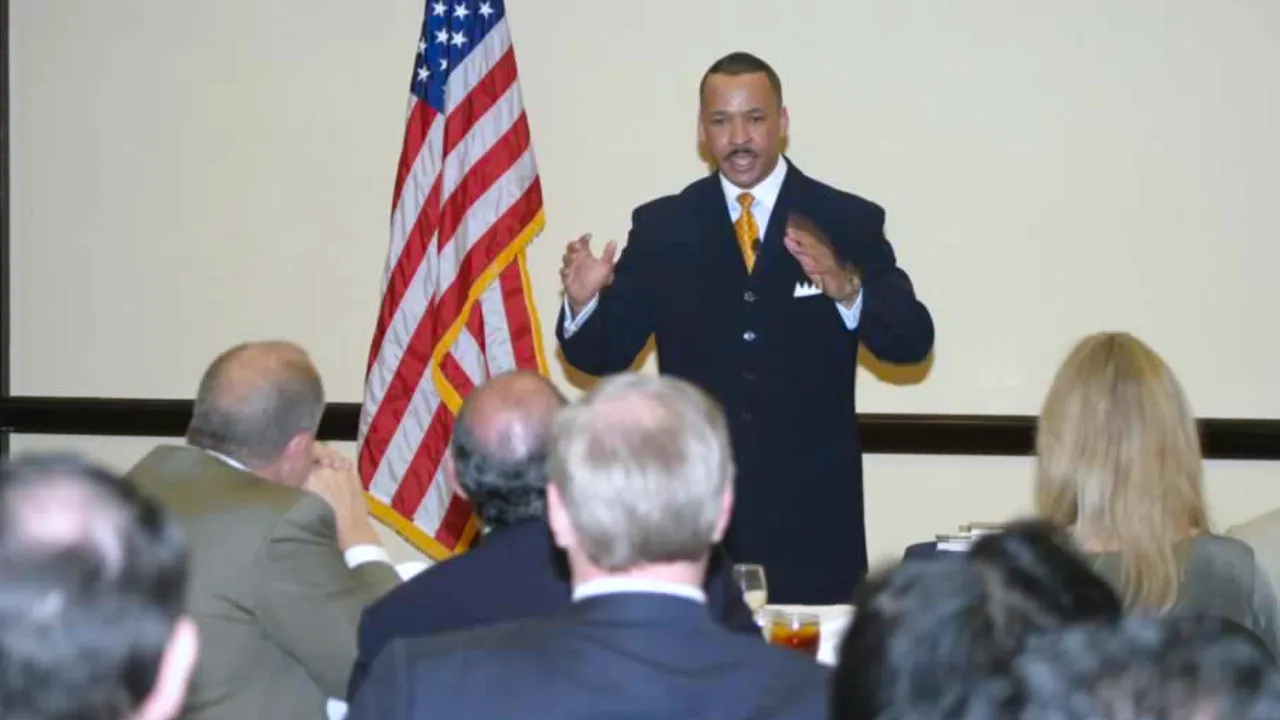
Sometimes there were only 15 people in the room. But one of those 15 could go to work the next day and say, “I heard somebody yesterday. You need to get him in here.”
That’s why I call it a marketing speaking engagement.
If you want to know how to become a motivational speaker with no experience, I’ll show you how I got into those rooms, what I said once I got there, and how you can give someone a reason to recommend you for a paid talk.
1. Start with a room you can get into
Put yourself in the shoes of a conference planner.
They have a room full of people coming. They need to know you can hold the audience, give them something useful, and finish on time. When nobody there has heard you speak, even an offer to speak for free can be a hard sell.
So start with a room where you can show what you can do. For me, that meant civic clubs. Zig Ziglar and Les Brown spoke for free when they were getting started, too. Those early talks give you time in front of real people while you build a name for yourself.
In a room of 15 or 20 people, you can see where they lean in, where they laugh, and where you’ve spent too long telling a story. Then you take that same talk to the next room and do it a little better.
2. Build one 20-minute talk
Pick a subject people already care about. Narrow it down until you can say in one sentence what they’ll take away.
Let’s say I’m putting together a talk on appreciation. I might call it Give People Their Flowers While They Can Smell Them.
Why do we wait until people die to give them flowers? We tell a whole room how much they meant to us. Imagine what it would have meant if we’d told them on a regular Tuesday.
From there, I’d tell a true story about someone who made a difference in my life. I’d show the audience how to thank somebody in a way that means something. Then I’d ask them to do it that day.
Here’s a simple way to build your own talk.
- Open with a question or a moment people recognize. Give them a reason to listen.
- Tell one story. Take them to the moment when you learned the lesson.
- Teach one thing they can use. Show them what it looks like or give them the exact words to say.
- End with one action. Give them something they can do before the day is over.
In my appreciation talk, I’d ask people to think of someone they’ve been meaning to thank. Then I’d give them three things to put in the message. Tell them what they did. Tell them why it mattered. Tell them what it made possible for you.
Rehearse out loud with a timer. If the club gives you 20 minutes including questions, aim for about 15 minutes of speaking. Ask how much time you have before you show up.
3. Find civic clubs near you
Search for “civic clubs in [your city]” or look for a local Jaycees chapter. You can also use these club directories to see what’s nearby.
Once you find a club, check its local website for meeting details. Look for the person who schedules guest speakers. That might be the program chair, the president, or another member.
With Rotary, I’d start by asking around for a Rotarian who can recommend you. In my experience, a member introduction is usually the way in. That person can tell you how their club books speakers and put you in touch with whoever runs the program.
Find out who will be in the room. If you’re pitching a group of volunteers, give them an example that fits the work they do. If you’re talking to local business owners, show them how they can use the same idea with their teams. You can give the same talk in both rooms. Change the examples so each group can see where the lesson fits.
4. Send a short email about the talk
A lot of beginners lead with “I’m a motivational speaker.” What the organizer needs to know is what you’ll do for their members.
Here’s the email I’d send.
Subject
20-minute guest talk for [Club Name]
Hi [First Name],
I’m a local speaker in [City], and I’d love to give a 20-minute talk at one of your upcoming meetings.
It’s called Give People Their Flowers While They Can Smell Them. Your members will leave with a simple way to thank someone who may have no idea how much they helped.
I’m available [give two or three dates], and I’d be glad to speak at no charge.
Are you the person who schedules guest speakers for [Club Name]?
Thanks,
[Your Name]
[Phone Number]
Have a short bio, a clear photo, and a few sentences about the talk ready to send. If you have a one-page speaker website, link to it. You can send your first email while you’re still building the site.
Use the experience you already have in your bio. Maybe you led a team through a rough change. Maybe you ran a small business and had to start over. Tell the organizer why you care about the subject and what you learned that their members can use.
5. Treat it as a marketing speaking engagement
Here’s where I want you to listen carefully.
Let’s say I’m giving that talk on appreciation. I’ve just asked people to think of someone who made a difference in their life. Right there, I might say something like this.
When I speak to companies about why good people leave, I ask managers a version of that same question. Who on your team made your job easier this week? And have you told them exactly what they did that helped?
Then I’d give them the words a manager could use.
When we were short-staffed on Tuesday, you took the time to walk our new hire through the system. She knew what to do the next morning because you helped her. I appreciate that.
Do you see what I did there?
The audience heard what I teach at a company, and I gave them something they could use. Then I went right back to the talk.
If you’re brand new, use words that fit your experience.
If you lead a team, try this at work. Think of one person who made your job easier this week. Before you go home, tell them exactly what they did that helped.
At the end, if the host is comfortable with it, give people a simple way to refer you.
If you know a team that could use a talk like this, I’d appreciate an introduction. Come see me after the meeting.
There may be a retired executive in the room who still talks to people at their old company. Someone else might serve on an association board. They can make an introduction because they heard you speak and know what you can offer.
That’s why I took those rooms seriously. A room of 15 people is 15 people who can tell somebody what they heard.
6. Leave with something that helps you book the next talk
If you’re figuring out how to become a motivational speaker with no experience, remember what that first clip does for you. Now the next organizer can see you speaking to real people.
When the organizer says yes, ask whether you can record part of your talk. Put your phone where it can capture you clearly, and follow the host’s rules about filming attendees. One short clip with clear sound lets the next organizer hear you for themselves. When you have a few clips, here’s how to create a speaker reel.
After the talk, send a thank-you note. If the organizer was happy with it, ask them to write a sentence about what their members found useful. Get permission before you put their name or quote on your site.
And if you remember one question from this article, make it this one.
Do you know one other group that would get something out of this talk? If someone comes to mind, would you be comfortable introducing us?
That gives the organizer a specific person or group to think about. And it gives you a warm introduction to your next room.
7. Start quoting a fee when you can show what you deliver
After you’ve given the talk a few times, look at what you have. Can you describe who the talk helps? Can you show a clip? Can an organizer say what their group got out of it? Can you adapt it to a company meeting or a longer program?
When you can answer those questions, start quoting a fee for paid work. If someone introduces you to a company, ask what prompted the call, who will be in the room, and what they want people to take away. Once you understand what they need, quote a fee for the engagement.
You can still say yes to a civic club you want to serve. You can also charge for a company keynote that takes planning and time to tailor to the audience. If you’re ready to take that next step, read my guide on how to start a speaking business.
How to Become a Motivational Speaker With No Experience: Your First Step
If you’ve been waiting for somebody to give you a chance to speak, here’s what I’d do today.
Write down the title of one talk. Then finish this sentence. “After my talk, people will know how to ______.”
Look up one local club and send the email.
I was glad to get the meal. What helped me build a speaking career was what happened during those 20 minutes. People got to hear me speak. I got to see what connected. And when somebody asked what else I spoke about, I knew what to say.
What’s your biggest question about getting started as a motivational speaker?
Maybe you’re stuck on what to talk about. Maybe you’ve found a club but have no idea what to say in that first email. Or maybe you’ve already spoken for free and want to know when to start charging.
Tell me where you’re stuck in the comments. I’ll use your questions to decide what to write about next.